
Microsoft Expands Azure Infrastructure in Saudi Arabia
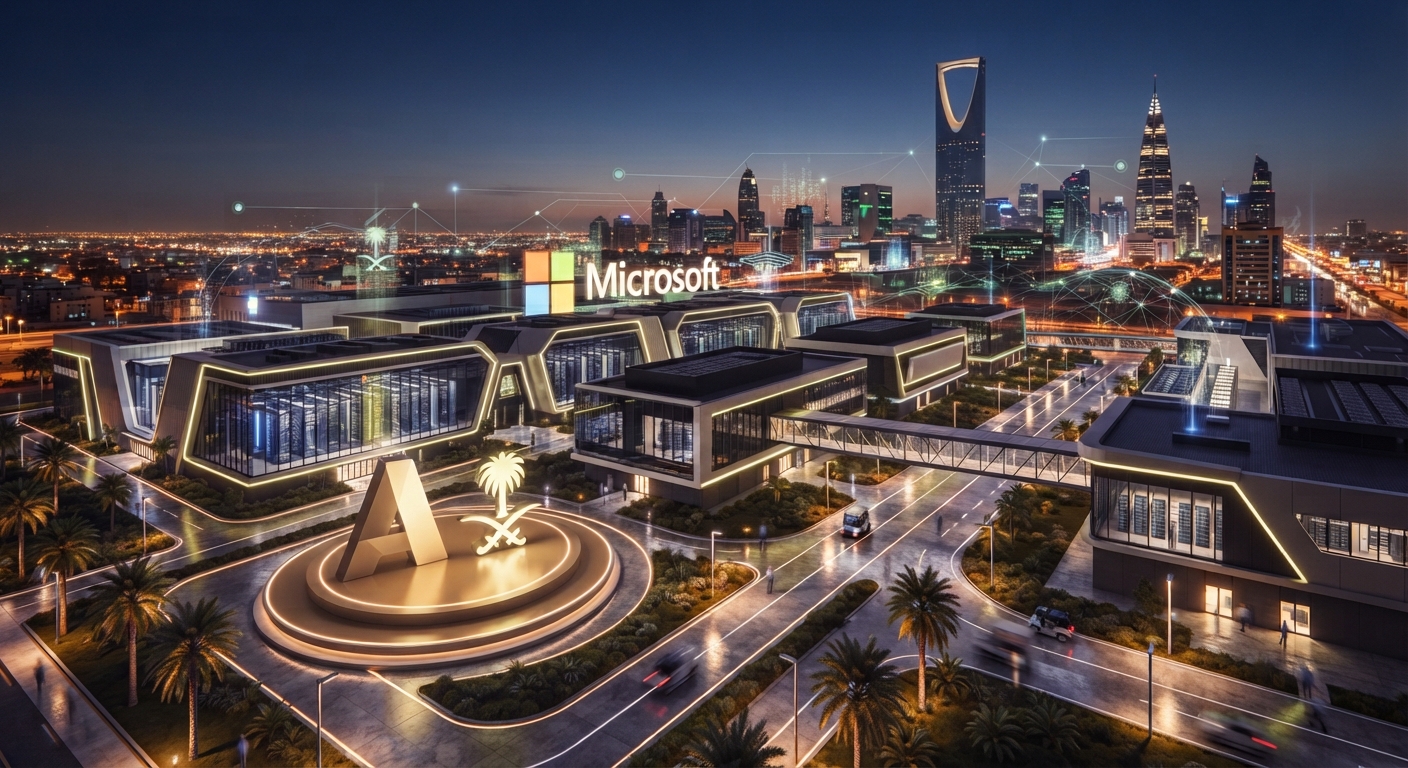
Microsoft is taking another major step in expanding its cloud and artificial intelligence infrastructure in Saudi Arabia, with the company confirming that its Saudi Arabia East datacenter region will become available to customers in November 2026.
Located in the Kingdom’s Eastern Province, the new Azure region will consist of three Availability Zones, providing organizations with local data residency, high availability, enterprise-grade security and lower-latency access to Microsoft cloud and AI services.
The expansion comes as Saudi Arabia accelerates investments in cloud computing, AI infrastructure and digital transformation under Vision 2030.
A New Azure Region for Saudi Arabia
The Saudi Arabia East region represents a significant expansion of Microsoft’s local cloud infrastructure.
Once operational, organizations in Saudi Arabia will be able to host eligible workloads and data locally while accessing supported Microsoft Azure and AI services. The three Availability Zones are designed to provide greater resilience and continuity for organizations running mission-critical workloads.
Local infrastructure is particularly important for sectors such as government, financial services, healthcare and large enterprises, where data residency, security, compliance and availability can be critical requirements.
Microsoft’s Azure infrastructure page now lists Saudi Arabia East among its Azure regions.
AI Is Driving the Infrastructure Expansion
The growth of cloud infrastructure in Saudi Arabia is closely connected to the Kingdom’s broader AI ambitions.
AI applications require significant amounts of computing power, storage and networking infrastructure. As organizations move from experimenting with AI to deploying it across their operations, demand for scalable cloud infrastructure is also increasing.
Microsoft says the new Saudi region will provide the local digital foundation needed to help organizations move AI workloads into production and scale them across different sectors.
This aligns with Saudi Arabia’s wider push to develop an integrated AI ecosystem covering data centers, accelerated computing, cloud services, AI models and sector-specific applications.
Saudi Arabia’s Growing Data Center Market
Microsoft’s expansion is taking place alongside rapid growth in Saudi Arabia’s overall data center infrastructure.
According to Saudi government figures released in July 2026, the Kingdom had reached 467 MW of operational data-center capacity, representing approximately 47% of total capacity in the Middle East and North Africa.
Saudi Arabia is also working toward 6.9 GW of data-center capacity by 2034, including a target of 3 GW by 2030.
This growing infrastructure base is creating the physical foundation required for cloud computing and increasingly demanding AI workloads.
Microsoft’s Broader Investment in the Region
The Saudi Azure expansion is part of Microsoft’s wider commitment to the Middle East.
In September 2026, Microsoft announced plans to invest more than $10 billion across the Middle East between now and 2030, covering cloud and AI infrastructure, digital resilience and workforce development. The commitment includes Saudi Arabia, the UAE, Qatar and Kuwait.
Microsoft also plans to invest more than $400 million in subsea and terrestrial connectivity across the region by 2030, supporting increased capacity and regional data flows.
These investments demonstrate that cloud expansion is not limited to individual data centers. It also requires connectivity, cybersecurity, energy, skills and supporting digital infrastructure.
Developing Saudi Arabia’s AI Talent
Infrastructure is only one part of Microsoft’s Saudi strategy.
The company says it has already helped 1.6 million people in Saudi Arabia develop digital and AI skills, with a broader goal of helping 3 million people in the Kingdom acquire AI skills by 2030.
Microsoft is also establishing an AI Arabia Center of Excellence in collaboration with Saudi partners and plans to launch a Microsoft Innovation Hub in the Kingdom in November 2026.
The Innovation Hub will provide organizations and partners with opportunities to explore, prototype and develop solutions using Microsoft’s cloud and AI technologies.
A Competitive Cloud Landscape
Microsoft’s expansion also comes as several global technology companies increase their cloud and AI presence in Saudi Arabia.
At LEAP 2026, Saudi Arabia announced major developments across cloud computing and AI infrastructure. AWS announced plans for its first Saudi cloud infrastructure region in December 2026, backed by planned investment of more than $5.3 billion.
With Microsoft Azure and AWS both establishing local cloud infrastructure, alongside existing activity from companies such as Google Cloud and Oracle, Saudi Arabia is developing a broader hyperscale cloud ecosystem.
This competition can expand the range of cloud services available to businesses and public-sector organizations while supporting the Kingdom’s wider digital transformation.
Supporting Vision 2030
The development of local cloud and AI infrastructure supports several objectives associated with Saudi Arabia’s Vision 2030 transformation.
Local cloud regions can help organizations modernize IT environments, deploy AI applications, improve digital services and process increasingly complex workloads.
At the same time, investments in data centers, connectivity, cybersecurity and technical skills can contribute to the development of a broader technology ecosystem inside the Kingdom.
Saudi Arabia’s digital economy has been expanding rapidly, while its data-center and AI infrastructure investments are positioning the country to support increasingly compute-intensive industries.
What This Means for the Future
Microsoft’s Saudi Arabia East region is more than another cloud infrastructure project. It represents another building block in Saudi Arabia’s transition toward a locally supported, AI-enabled digital economy.
With the region scheduled to become available in November 2026, organizations will gain access to local Azure infrastructure designed around data residency, resilience, security and AI workloads.
Combined with expanding data-center capacity, new cloud providers, AI partnerships and workforce initiatives, Saudi Arabia is building an increasingly comprehensive digital infrastructure ecosystem.
Final Thoughts
Microsoft’s expansion of Azure infrastructure in Saudi Arabia comes at a time when cloud computing and AI are becoming increasingly interconnected.
The launch of the Saudi Arabia East datacenter region, supported by three Availability Zones, will provide local access to Microsoft cloud and AI services while contributing to the Kingdom’s growing technology infrastructure.
As Saudi Arabia continues investing in data centers, cloud platforms, AI capabilities and digital talent, partnerships with global technology companies such as Microsoft are helping build the infrastructure needed for the next phase of the Kingdom’s digital economy.