GO Telecom Awards $49.5 Million Contract for AI and Cloud Data-Centre Infrastructure in Saudi Arabia
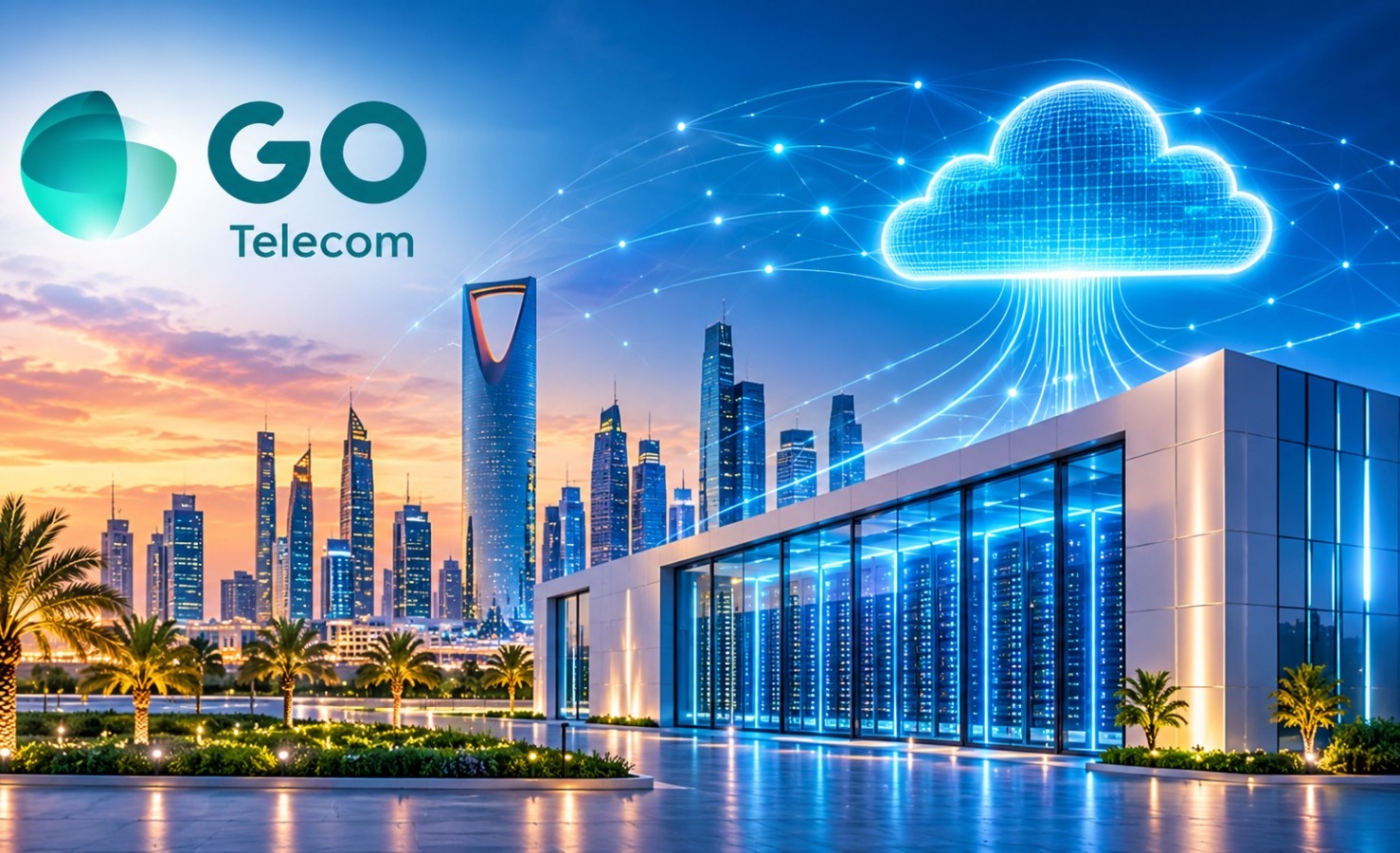
Saudi Arabia’s growing demand for artificial intelligence (AI) and cloud computing is driving investment in advanced digital infrastructure. In the latest development, Etihad GO Telecom Company (GO Telecom) has awarded a SAR 185.9 million ($49.5 million) contract to Total Technical Triangle Company (3T) for the supply and installation of infrastructure for a new Cloud AI Data Centre.
Announced on 1 November 2026, the project will feature advanced computing systems from Dell Technologies equipped with NVIDIA Graphics Processing Units (GPUs). The 12-month contract represents another step in Saudi Arabia’s expanding AI infrastructure market and GO Telecom’s strategy to strengthen its cloud and digital services business.
A $49.5 Million Investment in AI Infrastructure
The contract, valued at SAR 185,912,402 excluding VAT, was awarded to 3T on 29 October 2026.
The project covers the supply, installation and deployment of the technical infrastructure required for the Cloud AI Data Centre. This includes advanced computing systems, servers, supporting hardware, systems and technical licences needed to operate and manage the facility.
3T, an authorised Dell Technologies partner, will deliver the project over a 12-month implementation period.
Once operational, the infrastructure is intended to support GO Telecom’s expansion into AI and cloud computing services for both public- and private-sector customers.
Dell Technologies and NVIDIA Power the Project
A key feature of the development is the combination of Dell Technologies’ enterprise computing systems and NVIDIA’s GPU technology.
Dell’s computing infrastructure will provide the server systems required to process, store and manage data, while NVIDIA GPUs will support the demanding computational workloads associated with artificial intelligence.
GPUs are particularly important for AI applications because they can perform large numbers of calculations simultaneously. This makes them suitable for machine learning, AI model development, generative AI and other data-intensive workloads.
The combination of these technologies will provide the computing foundation for GO Telecom’s planned AI and cloud services.
Expanding GO Telecom’s Digital Services
The project is part of GO Telecom’s broader strategy to expand beyond traditional telecommunications and strengthen its position in the digital services market.
Through its Business Sector, the company aims to provide advanced AI and cloud computing services to government organisations and private enterprises.
This reflects a wider industry trend in which telecommunications operators are increasingly exploring opportunities in cloud infrastructure, enterprise technology, cybersecurity and AI-powered services.
For GO Telecom, the new data-centre infrastructure is intended to support this expansion while diversifying its revenue streams.
Why AI Data Centres Are Becoming More Important
AI applications require significantly different computing resources from many traditional business applications. Training and running advanced AI models can involve processing enormous volumes of information, making powerful servers, specialised processors and high-performance networking essential.
As businesses adopt AI-powered applications, demand for specialised computing environments continues to increase.
AI data centres can support several important applications:
- Generative AI: Running applications that generate text, images, code and other digital content.
- Machine Learning: Training models to analyse information and identify patterns.
- Cloud Computing: Providing scalable computing resources to businesses and organisations.
- Data Analytics: Processing large datasets to support business intelligence and decision-making.
- Business Automation: Supporting intelligent systems that automate workflows and operational tasks.
For Saudi Arabia, expanding this infrastructure is important to supporting the growing use of AI across government, finance, telecommunications, healthcare and other industries.
Opportunities for Saudi Arabia’s IT Sector
The expansion of AI and cloud infrastructure creates opportunities beyond the main computing equipment.
Data centres depend on an interconnected range of technology solutions, including enterprise servers, storage systems, networking switches, cybersecurity products, power infrastructure and cooling technologies.
System integrators, technology distributors and IT solution providers can play an important role in supplying and integrating these components.
As more organisations invest in AI and cloud computing, demand for reliable enterprise hardware, high-speed connectivity and infrastructure management solutions is expected to remain an important part of the technology market.
GO Telecom’s project is another example of how investment in advanced computing can create opportunities across the wider IT supply chain.
What Comes Next?
The project is scheduled to be implemented over 12 months. However, GO Telecom has not yet disclosed the data centre’s location, planned computing capacity or power requirements.
The company has also stated that the financial impact will be determined after the necessary contract-signing requirements and procedures are completed. Further material developments are expected to be disclosed in due course. <Cite refs={[“turn368822search1″,”turn368822search6”]}/>
These details will help provide a clearer picture of the facility’s eventual scale and its role in GO Telecom’s cloud and AI services strategy.
Final Thoughts
GO Telecom’s $49.5 million contract highlights the growing importance of advanced computing infrastructure in Saudi Arabia’s digital transformation.
With Dell Technologies computing systems and NVIDIA GPUs at the centre of the project, the planned facility is intended to support the company’s expansion into AI and cloud services for businesses and government organisations.
As AI adoption accelerates, investments in servers, storage, networking and specialised computing infrastructure will become increasingly important.