
Toyota’s Woven City: The World’s First Robot City Begins to Take Shape
A Bold Step Toward the Future
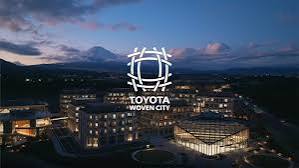
In a world constantly pushing the boundaries of innovation, Toyota’s “Woven City” stands out as a bold and visionary project. Slated to partially open in autumn 2025, this experimental smart city will sit at the base of Mount Fuji in Japan, offering a real-world testbed for technologies that will define urban life in the coming decades.
Described by Toyota as a “living laboratory,” Woven City will be home to full-time residents and researchers, living side-by-side with robots, autonomous vehicles, and AI systems. It represents not just a new city, but a new way of living—where infrastructure, mobility, sustainability, and human-centric design are seamlessly integrated.
What Is Woven City?
Woven City is Toyota’s futuristic urban prototype, being built on a 175-acre former car factory site (the Higashi-Fuji Plant). The city will be developed in three types of interconnected pathways or “weaves”:
- One for autonomous vehicles
- One for pedestrians
- One for personal mobility devices
This “weaving” concept inspired the name of the city, and it reflects Toyota’s desire to tightly integrate mobility, human life, and nature.
Life in the Robot City
Smart Homes
All homes in Woven City will be outfitted with AI-powered sensors, allowing for continuous health monitoring, energy optimization, and seamless communication with city infrastructure. These smart homes will learn from the habits of their residents, adapting environments for improved comfort and wellbeing.
Robots as Roommates
From household support bots to autonomous delivery systems, Woven City will feature a rich population of robots. For example, a central underground tunnel system will allow delivery robots to transport goods and waste discreetly, improving cleanliness and reducing noise.
Autonomy on the Streets
Only autonomous electric vehicles will operate on the main roads of Woven City. These cars will serve as public transport and mobile offices, redefining commuting. Toyota’s own e-Palette vehicle will be a central feature—capable of being transformed from a ride-share shuttle to a pop-up store.
Sustainability at Its Core
Woven City is designed to be a model of eco-friendly urban living, with sustainability deeply embedded into every part of its structure. From the start, Toyota has focused on using clean energy sources, primarily hydrogen fuel cells and solar power, to run the city efficiently without harming the environment. This renewable energy setup will power homes, vehicles, and public services, reducing reliance on fossil fuels and setting an example for future smart cities.
The buildings in Woven City will be constructed mainly from sustainable timber, using traditional Japanese joinery methods enhanced by robotic precision. This approach not only lowers carbon emissions but also connects the modern city with Japan’s cultural heritage. Green rooftops and solar tiles will help manage heat, support urban farming, and generate clean electricity, creating structures that are both smart and environmentally friendly.
To minimize waste and pollution, the city will feature a central underground tunnel system for transporting goods and disposing of waste. Water recycling systems will be used to treat and reuse water for gardening and sanitation, while AI-powered agriculture will promote local food production. These thoughtful systems show how Woven City aims to create a balanced and sustainable lifestyle, where technology supports both people and the planet.
Who Will Live There?
In its first phase, Woven City will welcome about 360 residents, primarily senior citizens, families with young children, and inventors. Eventually, it will expand to house more than 2,000 people—including Toyota employees, researchers, and even ordinary citizens willing to test and co-live with advanced technology.
The Bigger Vision
Toyota doesn’t just see Woven City as a demonstration of its technology—it views it as a “real-world incubator.” The goal is to allow tech startups, researchers, and partners from around the world to test and refine ideas in a functioning ecosystem.
From AI and robotics to healthcare and mobility, Woven City could become the epicenter of breakthroughs that ripple across the globe.
Final Thoughts
Woven City isn’t science fiction—it’s a tangible prototype of the city of the future. In a world facing rapid urbanization, environmental stress, and technological transformation, Toyota’s initiative offers a hopeful and ambitious answer: a city designed to be not just smart, but human-centered, sustainable, and adaptable.
As 2025 approaches, all eyes are on Mount Fuji—where the future is not just being imagined, but built.