
China’s Unitree Humanoid Robots G1 and R1 Are Advancing Combat Skills at an Alarming Rate
Introduction
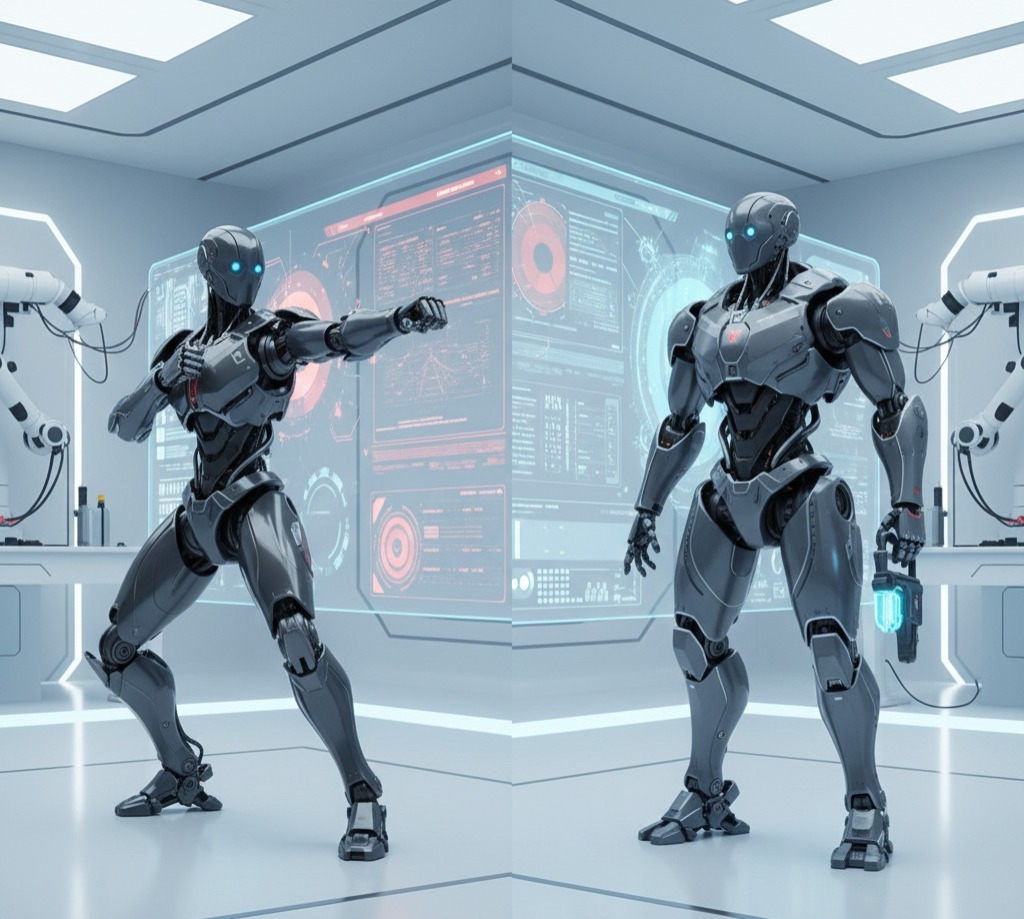
Humanoid robots are no longer confined to laboratories or controlled industrial environments. In China, robotics company Unitree Robotics is pushing humanoid machines into a new and controversial territory — combat-style physical performance. With its G1 and R1 humanoid robots, Unitree is showcasing rapid advancements in agility, balance, and coordinated motion that resemble martial arts and combat training, raising both excitement and concern within the global tech community.
Unitree Robotics: From Robot Dogs to Humanoid Fighters
Unitree Robotics first gained international recognition for its agile quadruped robot dogs. Building on this expertise in motion control, the company has shifted focus toward bipedal humanoid robots, aiming to replicate complex human movements with increasing precision.
The result is a new generation of humanoids that move faster, recover balance quicker, and perform coordinated actions once thought impossible for machines at this scale.
G1 Humanoid Robot: Combat-Ready Agility on Display
The Unitree G1 humanoid robot has recently captured global attention after participating in public kickboxing and combat-style demonstrations in China. Standing approximately 1.3 meters tall, the G1 demonstrated:
- Rapid punches and kicks
- Stable footwork and dynamic balance
- The ability to recover quickly after falling
- Coordinated upper and lower body movement
These demonstrations were presented in competitive, referee-style settings, making them appear strikingly similar to human combat sports. While many of these actions rely on pre-programmed routines and human oversight, the mechanical execution itself represents a significant leap in humanoid mobility.
R1 Humanoid Robot: Affordable, Agile, and Accessible
Following the G1, Unitree introduced the R1 humanoid robot, a smaller and significantly more affordable platform designed for developers and researchers. Despite its lower cost, the R1 showcases impressive physical capabilities, including:
- High-speed walking and running
- Agile body rotations and balance recovery
- Mock combat and martial-arts-like movements
- Voice and vision-based interaction
The R1’s accessibility signals Unitree’s ambition to democratize humanoid robotics, allowing more experimentation with advanced physical intelligence — including movement patterns that resemble combat training.
Are These Robots Really Learning to Fight?
Despite alarming headlines, it is important to clarify that these robots are not autonomous fighters. Their actions are largely driven by:
- Pre-trained motion models
- Reinforcement learning for balance and movement
- Scripted or remotely guided sequences
However, the speed, precision, and realism of these movements mark a major milestone. The same technologies enabling combat-like demonstrations are also critical for real-world applications such as disaster response, logistics, and hazardous-environment work.
Why These Developments Matter
The rapid advancement of humanoid physical capabilities raises important questions:
- How should humanoid robots be regulated?
- Where is the line between demonstration and weaponization?
- What ethical frameworks are needed as robots gain human-like strength and coordination?
- While Unitree positions its robots as research and development platforms, the visibility of combat-style demonstrations has intensified global discussions around the future role of humanoid robots in society.
The Bigger Picture: Innovation or Warning Sign?
Unitree’s G1 and R1 robots highlight how quickly humanoid robotics is evolving. What once required years of research can now be demonstrated on public stages. Whether these machines become helpers, performers, or something more controversial depends on how the technology is guided and governed.
One thing is certain: humanoid robots are advancing faster than public policy and ethical debate, and Unitree’s latest demonstrations are a powerful reminder that the age of physically capable robots has already arrived.