

ABB Robotics Demonstrates AI-Driven Automation at SLAS 2026
Introduction
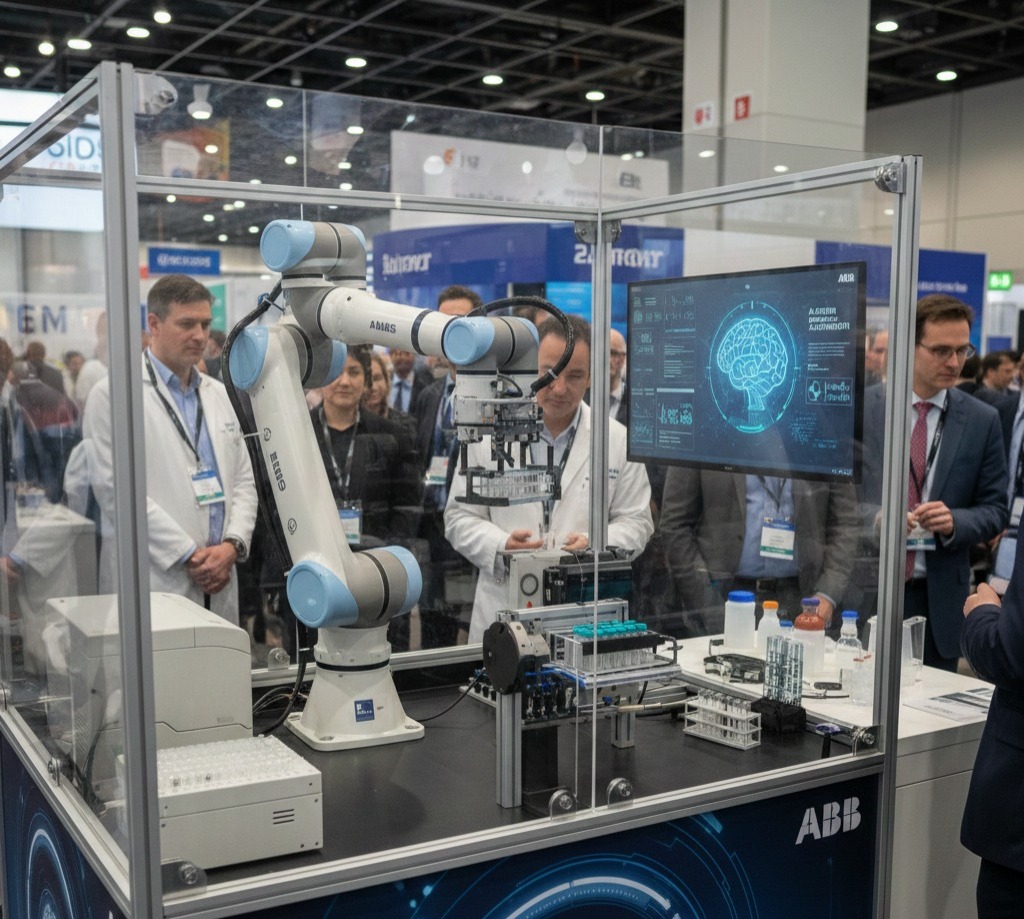
At SLAS 2026, one of the world’s leading conferences for laboratory automation and life sciences innovation, ABB Robotics unveiled its latest advancements in AI-powered automation. The showcase highlighted how artificial intelligence and collaborative robotics are reshaping laboratory workflows, driving higher efficiency, scalability, and precision.
ABB’s presence at the event signaled a clear message: the future of laboratory operations lies in intelligent, interoperable automation systems.
AI-Powered Automation Takes Center Stage
ABB demonstrated how AI integration enhances robotics beyond repetitive tasks. Instead of simple scripted movements, the showcased systems were capable of:
- Adaptive task handling
- Real-time decision support
- Seamless coordination with laboratory instruments
- Data-driven workflow optimization
This shift represents a move from isolated automation setups to fully connected, intelligent lab ecosystems.
Key Technologies Highlighted
1. Collaborative Robots (Cobots)
ABB showcased its collaborative robotic systems designed to work safely alongside human operators. These robots can:
- Handle sample preparation
- Transfer lab plates
- Perform analytical routines
- Operate with high repeatability and accuracy
The flexibility of cobots allows labs to automate complex processes without large infrastructure changes.
2. Multi-Vendor Integration
A major focus of ABB’s presentation was interoperability. Modern labs often use equipment from multiple vendors, and ABB’s solutions are designed to integrate smoothly across platforms.
This reduces vendor lock-in and allows laboratories to scale automation more efficiently.
3. Increased Throughput & Data Reliability
By combining robotics with AI intelligence, ABB demonstrated how labs can:
- Increase processing capacity
- Reduce human error
- Improve experimental consistency
- Generate more reliable data outputs
For research institutions and pharmaceutical companies, this translates to faster innovation cycles and improved operational performance.
Why This Matters for the Industry
Laboratory environments are becoming increasingly complex, with growing data volumes and higher precision requirements. AI-driven robotics addresses these challenges by:
- Automating repetitive and time-consuming tasks
- Enhancing workflow flexibility
- Supporting digital transformation in scientific research
The convergence of AI and robotics is no longer theoretical — it is actively being deployed in real-world laboratory settings.
Broader Implications
ABB’s demonstration reflects a larger global trend:
- AI is moving from purely digital applications into physical systems
- Robotics is evolving from automation tools into intelligent collaborators
- Labs and industrial facilities are shifting toward scalable, connected ecosystems
This transformation is expected to extend beyond laboratories into manufacturing, logistics, healthcare, and advanced research sectors.
Conclusion
ABB Robotics’ showcase at SLAS 2026 highlights the growing role of AI in shaping the future of automation. By combining collaborative robotics with intelligent software systems, ABB is helping laboratories transition from fragmented automation to fully integrated, data-driven environments.
As AI continues to merge with robotics, the next phase of industrial and scientific innovation will be defined by systems that not only execute tasks — but understand and optimize them.