

The Rise of Smart Living: Unipath Introduces an All-in-One Home Management Robot
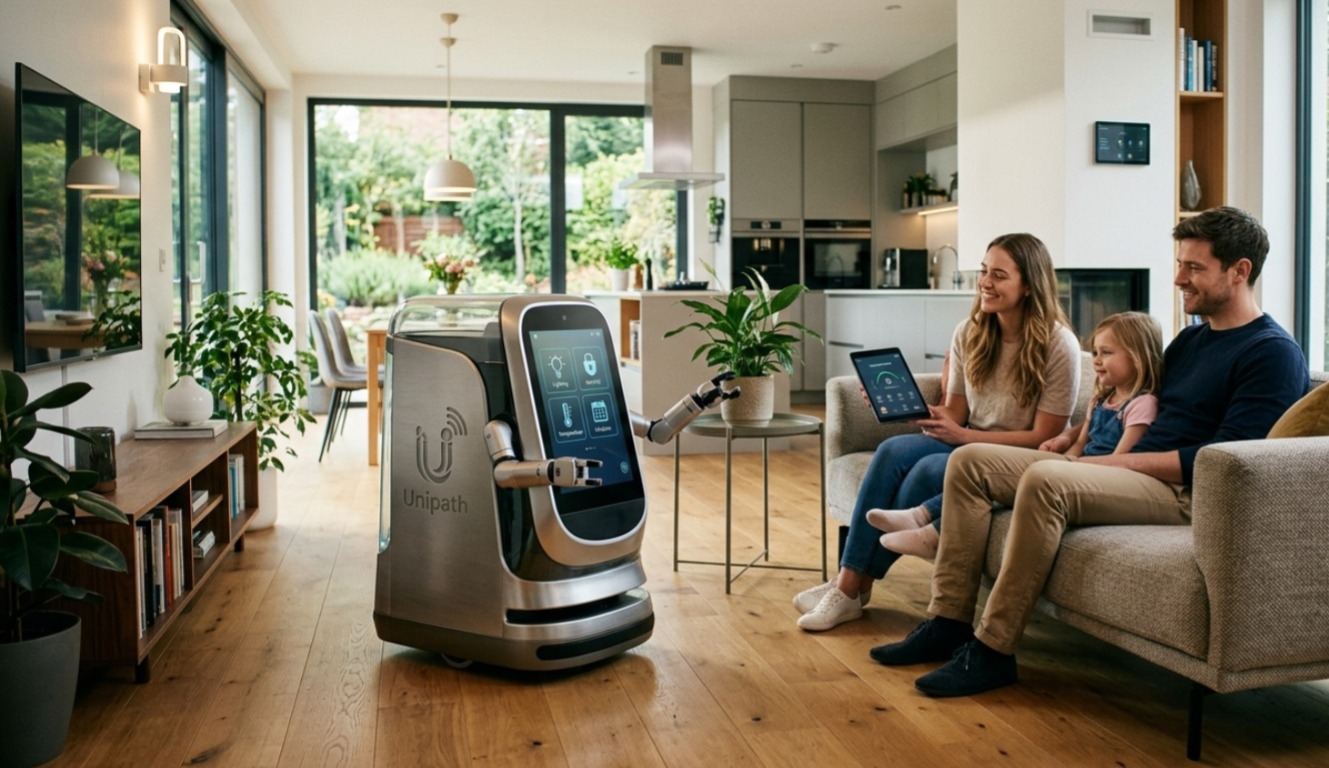
The concept of a fully automated home is no longer just a vision of the future. With rapid advancements in artificial intelligence and robotics, companies are now bringing intelligent home assistants into everyday life.
One of the latest developments comes from Unipath, which has introduced a new home robot designed to manage household tasks, control smart devices, and even assist with cooking. This innovation marks a significant step toward creating fully integrated smart homes powered by AI.
A New Era of Home Automation
Traditional smart homes rely on multiple devices — smart speakers, thermostats, lighting systems, and security tools — all functioning separately. Unipath’s robot aims to unify these systems into a single intelligent platform.
Instead of managing different apps and devices, users can interact with one system that understands commands and coordinates tasks across the entire home.
Key Features of the Unipath Home Robot
🤖 Centralized Home Management
The robot acts as a central hub, allowing users to:
- Control lighting, temperature, and appliances
- Monitor home security systems
- Schedule daily routines and automate tasks
This simplifies home management by bringing everything under one interface.
🧠 AI-Powered Intelligence
Powered by advanced artificial intelligence, the robot can:
- Learn user preferences over time
- Adapt to daily routines
- Provide personalized recommendations
This makes the system more intuitive and responsive compared to traditional automation tools.
🍳 Cooking Assistance and Meal Preparation
One of the most notable features is its ability to assist in the kitchen. The robot can:
- Guide users through recipes step-by-step
- Control smart kitchen appliances
- Help automate certain cooking processes
While fully autonomous cooking may still be evolving, this feature represents a major step toward AI-assisted kitchens.
📱 Smart Device Integration
The robot seamlessly connects with a wide range of smart home devices, ensuring compatibility across different ecosystems.
This allows users to manage everything — from entertainment systems to security cameras — without switching between multiple platforms.
Benefits for Everyday Users
The introduction of an all-in-one home robot offers several practical advantages:
- Convenience: Automates routine household tasks
- Efficiency: Reduces time spent managing devices
- Personalization: Adapts to individual lifestyles
- Accessibility: Makes technology easier to use for all age groups
These benefits make smart living more accessible and user-friendly.
The Bigger Trend: AI in Daily Life
Unipath’s innovation reflects a broader shift toward integrating AI into everyday environments. Homes are becoming smarter, more connected, and increasingly autonomous.
This trend is part of a larger movement where:
- AI assistants evolve into physical robots
- Smart homes transition into intelligent ecosystems
- Technology becomes more proactive rather than reactive
Challenges and Considerations
Despite its potential, the adoption of home robots also raises important concerns:
- Privacy and data security
- High cost of advanced robotics systems
- Dependence on AI for daily tasks
- Technical limitations in complex environments
Addressing these challenges will be key to widespread adoption.
Future Outlook
As technology continues to evolve, home robots are expected to become more advanced and accessible. Future developments may include:
- Fully autonomous household management
- Advanced cooking capabilities
- Deeper integration with AI ecosystems
- More affordable and compact designs
These innovations could redefine how people interact with their living spaces.
Conclusion
Unipath’s home robot represents a major step toward the future of smart living. By combining AI, robotics, and home automation into a single system, it simplifies everyday tasks and enhances convenience.
While still in its early stages, this technology signals a future where homes are not just connected — but intelligent, responsive, and capable of managing themselves.