
Saudi Arabia’s Data Center Boom: Building the Infrastructure Behind the AI Revolution
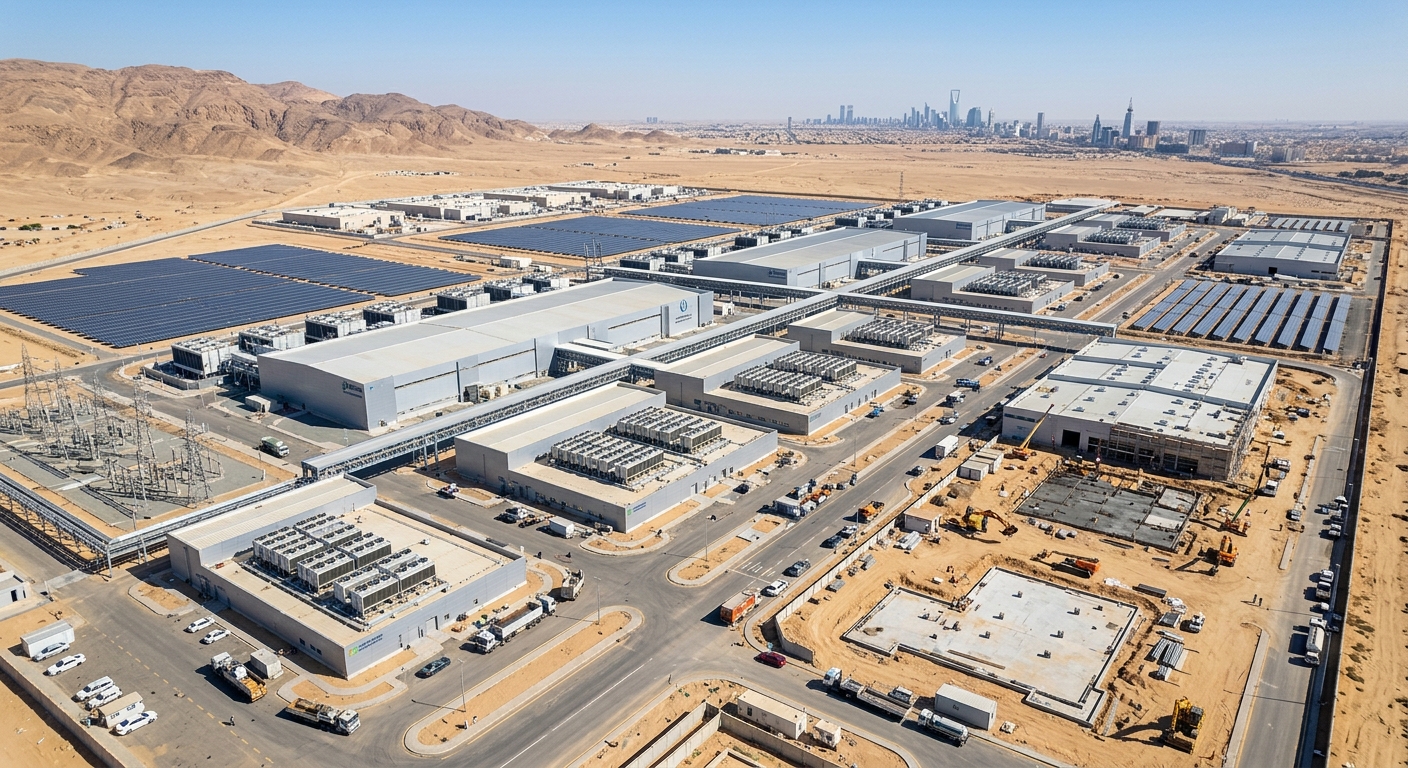
Saudi Arabia is rapidly emerging as one of the Middle East’s most important destinations for artificial intelligence and digital infrastructure investment.
The Kingdom’s data-center capacity has grown dramatically in recent years, rising from 68 MW in 2021 to more than 467 MW in the first quarter of 2026. At the same time, investments exceeding SAR 56.2 billion have been directed toward data centers and digital infrastructure.
This rapid expansion reflects Saudi Arabia’s broader ambition to become a global hub for AI, cloud computing, and advanced digital technologies.
From 68 MW to More Than 467 MW
The growth of Saudi Arabia’s data-center sector has been remarkable.
Since the launch of Vision 2030, the Kingdom has expanded its operational data-center capacity by more than six times. By Q1 2026, capacity had surpassed 467 MW, representing around 47% of total operational data-center capacity across the Middle East and North Africa, according to Saudi officials.
This growth is being driven by increasing demand for cloud computing, AI applications, enterprise technology, and digital services.
AI Is Driving the Demand for Data Centers
The rapid development of generative AI has created an enormous need for computing power.
Training and operating advanced AI models requires high-performance processors, large-scale storage, high-speed networking, and reliable energy supplies.
As Saudi Arabia expands its AI ecosystem, data centers are becoming a critical part of the country’s technology strategy.
They provide the infrastructure required for:
- Artificial intelligence and machine learning
- Cloud computing
- Generative AI
- Large-scale data processing
- Enterprise applications
- Digital government services
- AI model training and inference
In other words, the Kingdom is not only investing in AI applications—it is building the infrastructure needed to power them.
Saudi Arabia’s Ambitious Future Capacity
The Kingdom’s plans extend well beyond its current 467 MW capacity.
Saudi Arabia is targeting approximately 6.9 GW of total data-center capacity by 2034, including around 3 GW by 2030.
Achieving these targets would represent a massive expansion of the country’s computing infrastructure and could place Saudi Arabia among the world’s major data-center markets.
The availability of energy, large areas of land for development, and Saudi Arabia’s strategic position between Asia, Europe, and Africa are also helping attract international technology investment.
Global Technology Companies Are Taking Notice
Saudi Arabia’s growing digital infrastructure is attracting some of the world’s largest technology companies.
The Kingdom already hosts operations from major cloud providers including Oracle, Alibaba Cloud, and Google Cloud.
More partnerships and investments were announced during LEAP 2026, where nearly $15 billion in investments, launches, and agreements were announced across AI infrastructure, data centers, cloud computing, technology manufacturing, and other advanced technologies.
Among the announcements, AWS said it plans to launch its first cloud infrastructure region in Saudi Arabia in December 2026 as part of a planned investment exceeding $5.3 billion.
HUMAIN and the Next Generation of AI Infrastructure
Saudi AI company HUMAIN is also playing a major role in the Kingdom’s infrastructure strategy.
The company has entered partnerships with international technology and infrastructure companies to develop large-scale AI data centers and computing capabilities.
These initiatives are designed to create an integrated AI ecosystem covering everything from computing infrastructure and cloud services to AI models and enterprise applications.
This approach is important because successful AI ecosystems require more than advanced software—they require massive amounts of computing power to operate at scale.
Data Centers and Vision 2030
The expansion of digital infrastructure is closely connected to Saudi Arabia’s Vision 2030 strategy.
The Kingdom is working to diversify its economy by developing technology, AI, cloud computing, advanced manufacturing, and other knowledge-based industries.
A strong data-center ecosystem can support sectors such as:
- Healthcare
- Financial services
- Energy
- Manufacturing
- Logistics
- Smart cities
- Government services
By developing this infrastructure domestically, Saudi Arabia can strengthen its digital economy while attracting international companies and technology investment.
The Energy Advantage
Data centers require enormous amounts of electricity, making energy availability a major consideration when companies decide where to build new facilities.
Saudi Arabia’s significant energy resources, combined with its available land and strategic geographic location, provide important advantages for large-scale data-center development.
The Kingdom is also investing in broader digital and energy infrastructure to support the growth of AI and cloud computing.
This combination of energy + land + connectivity + investment is helping Saudi Arabia compete for a larger share of the global digital infrastructure market.
What This Means for the Future
The growth of Saudi Arabia’s data-center sector represents more than an increase in server capacity.
It is laying the foundation for a much larger technology ecosystem.
As computing capacity expands, the Kingdom could attract more AI startups, cloud providers, technology companies, researchers, and enterprises looking for access to advanced infrastructure.
It could also help accelerate the development of locally built AI models and digital services tailored to the region.
Final Thoughts
Saudi Arabia’s data-center transformation is moving at remarkable speed.
Going from 68 MW in 2021 to more than 467 MW in Q1 2026, while targeting nearly 6.9 GW by 2034, demonstrates the scale of the Kingdom’s digital infrastructure ambitions.
The global AI race is increasingly becoming a race for computing power, and Saudi Arabia is investing heavily in the infrastructure required to compete.
The Kingdom isn’t simply preparing for the AI era—it is building the infrastructure that will power it.