

AI-Powered Devices: How AI PCs and Smartphones Are Shaping the Future
Introduction
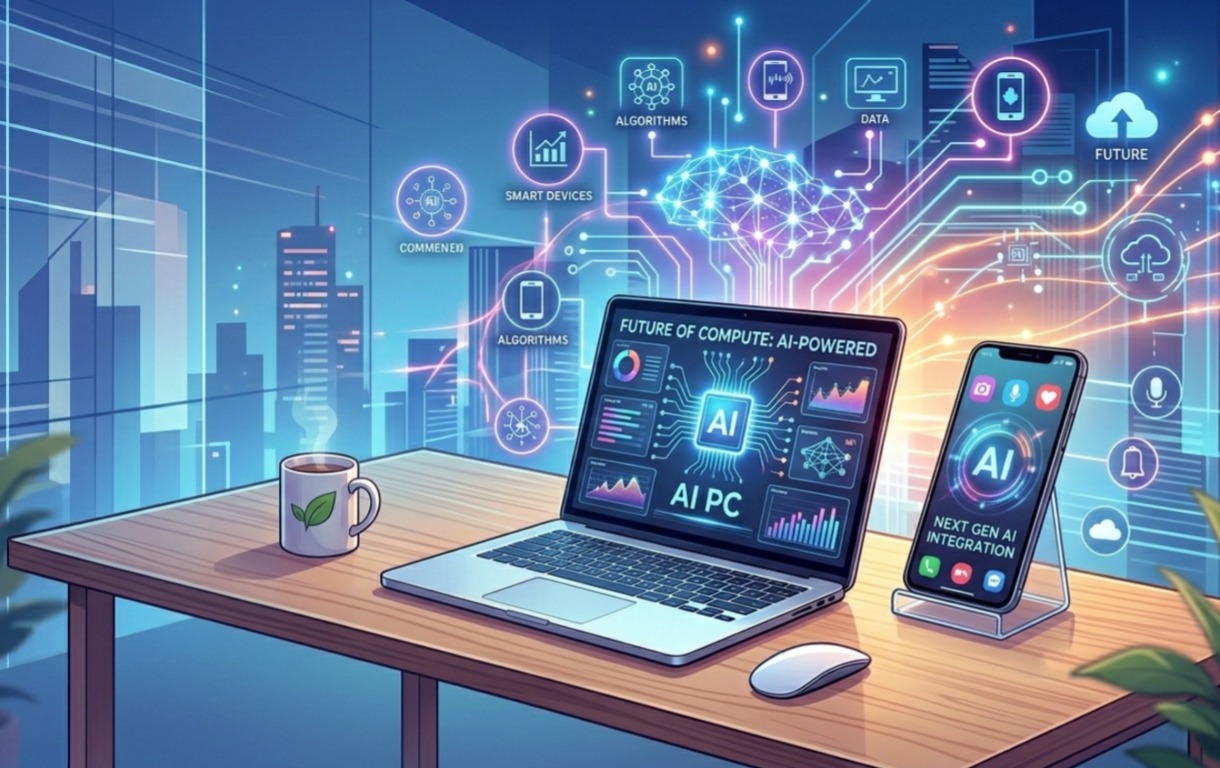
The next wave of innovation in consumer technology is here—and it’s powered by artificial intelligence. From smarter laptops to intelligent smartphones, AI-integrated devices are redefining how we interact with everyday technology.
Leading companies like Apple, Microsoft, and Qualcomm are driving this shift, introducing devices that can think, learn, and respond in real time. These AI PCs and AI smartphones are not just upgrades—they represent a major leap toward more personalized and efficient digital experiences.
What Are AI PCs and AI Smartphones?
AI PCs and smartphones are devices equipped with dedicated AI hardware, such as Neural Processing Units (NPUs), which allow them to run AI tasks directly on the device.
This means they can:
- Process data faster without relying heavily on the cloud
- Deliver real-time AI features
- Enhance privacy by keeping data local
- Provide smarter and more adaptive user experiences
Key Features of AI Devices
These next-generation devices come with powerful capabilities:
1. On-Device AI Processing
AI tasks like voice recognition, image editing, and text generation happen directly on your device—making them faster and more secure.
2. Smarter Personal Assistants
Virtual assistants are becoming more intelligent, capable of understanding context, predicting needs, and automating daily tasks.
3. Enhanced Productivity
From summarizing documents to generating content, AI tools help users work faster and more efficiently.
4. Advanced Photography and Media
AI-powered cameras can:
- Automatically enhance photos
- Improve low-light performance
- Edit images and videos instantly
Why This Shift Matters
The move toward AI-powered devices is transforming the tech landscape in several ways:
- Speed: Tasks are completed instantly without waiting for cloud processing
- Privacy: Sensitive data stays on the device
- Efficiency: Reduced dependency on internet connectivity
- Personalization: Devices learn user behavior and adapt accordingly
This evolution makes technology more intuitive and user-centric than ever before.
Industry Momentum
Major tech players are heavily investing in AI hardware and software:
- Microsoft is integrating AI deeply into Windows-based PCs
- Apple is enhancing on-device AI capabilities across its ecosystem
- Qualcomm is developing AI-focused chipsets for mobile devices
This growing competition is accelerating innovation and pushing AI devices into the mainstream.
Challenges Ahead
Despite the excitement, there are still hurdles:
- High cost of AI-enabled hardware
- Battery consumption concerns
- Need for optimized AI software ecosystems
- User awareness and adoption
However, these challenges are expected to diminish as the technology matures.
What the Future Looks Like
In the coming years, AI PCs and smartphones are expected to:
- Become the default standard for new devices
- Replace many traditional software tools with built-in AI features
- Enable more natural, human-like interaction with technology
- Support advanced applications like real-time translation and predictive automation
Conclusion
AI PCs and smartphones are not just a trend—they are the foundation of the next digital era. By combining powerful hardware with intelligent software, these devices are transforming how we work, communicate, and create.