

back to top
Google Expands AI Across Search, Android & XR  Artificial Intelligence is no longer just a feature — it is becoming the foundation of modern technology. At its latest developer event, Google unveiled a massive expansion of its AI ecosystem, integrating advanced AI capabilities deeper into Search, Android, Workspace, and Extended Reality (XR) devices. The announcement signals Google’s vision for a future where AI becomes seamlessly embedded into everyday digital experiences.  AI-Powered Search Becomes More Conversational  Google Search is evolving beyond traditional keyword-based results. With the latest AI upgrades powered by Gemini models, users can now receive more conversational, context-aware, and detailed responses directly within search results.  The new AI-powered Search experience can:  – Summarize complex topics instantly – Answer multi-step questions – Provide personalized recommendations – Generate visual and interactive responses – Assist users with planning, learning, and research tasks  This marks one of the biggest transformations in Google Search history, positioning AI as the central engine behind information discovery.  Gemini AI Expands Across Android  Google is also integrating Gemini AI deeper into Android devices. The company showcased smarter AI assistants capable of understanding on-screen content, voice commands, images, and user behavior in real time.  Some of the new Android AI features include:  – Real-time voice assistance – AI-generated replies and summaries – Smart photo and video editing – Context-aware app suggestions – Enhanced productivity tools  By embedding AI directly into the operating system, Google aims to create a more intuitive and personalized smartphone experience.  Google Pushes Further Into XR and Smart Glasses  One of the most exciting announcements was Google’s renewed focus on XR (Extended Reality), including AI-powered smart glasses and immersive computing experiences.  Google demonstrated how AI can enhance XR devices by:  – Translating conversations live – Providing navigation overlays – Identifying objects and landmarks – Delivering contextual information in real time – Supporting hands-free productivity  This move suggests Google is preparing for a future where wearable AI devices may eventually complement or even replace smartphones in certain scenarios.  AI Competition Continues to Intensify  Google’s aggressive AI expansion comes amid growing competition from major technology companies including OpenAI, Microsoft, Apple, Meta, and Anthropic. The race is no longer just about chatbots — it is about building complete AI ecosystems across devices, software, search, and hardware.  As companies invest billions into AI infrastructure and innovation, consumers can expect:  – Smarter digital assistants – Faster productivity tools – More personalized experiences – Advanced automation – New forms of human-computer interaction  What This Means for the Future  Google’s latest announcements demonstrate that AI is rapidly becoming the core layer of modern computing. From search engines to smartphones and wearable devices, AI is shaping how people interact with technology every day.  The expansion of AI across Search, Android, and XR signals a future where digital experiences become more intelligent, adaptive, and immersive than ever before.  While challenges surrounding privacy, accuracy, and regulation remain important, one thing is clear: the next era of technology will be powered by AI.  Final Thoughts  Google’s latest AI push is more than a software update — it is a strategic shift toward an AI-first ecosystem. By embedding AI across its products and platforms, Google is positioning itself at the center of the next generation of digital innovation.  As the AI race accelerates, the tech industry is entering a transformative period that could redefine how humans search, communicate, work, and interact with the world around them.

May 28, 2026

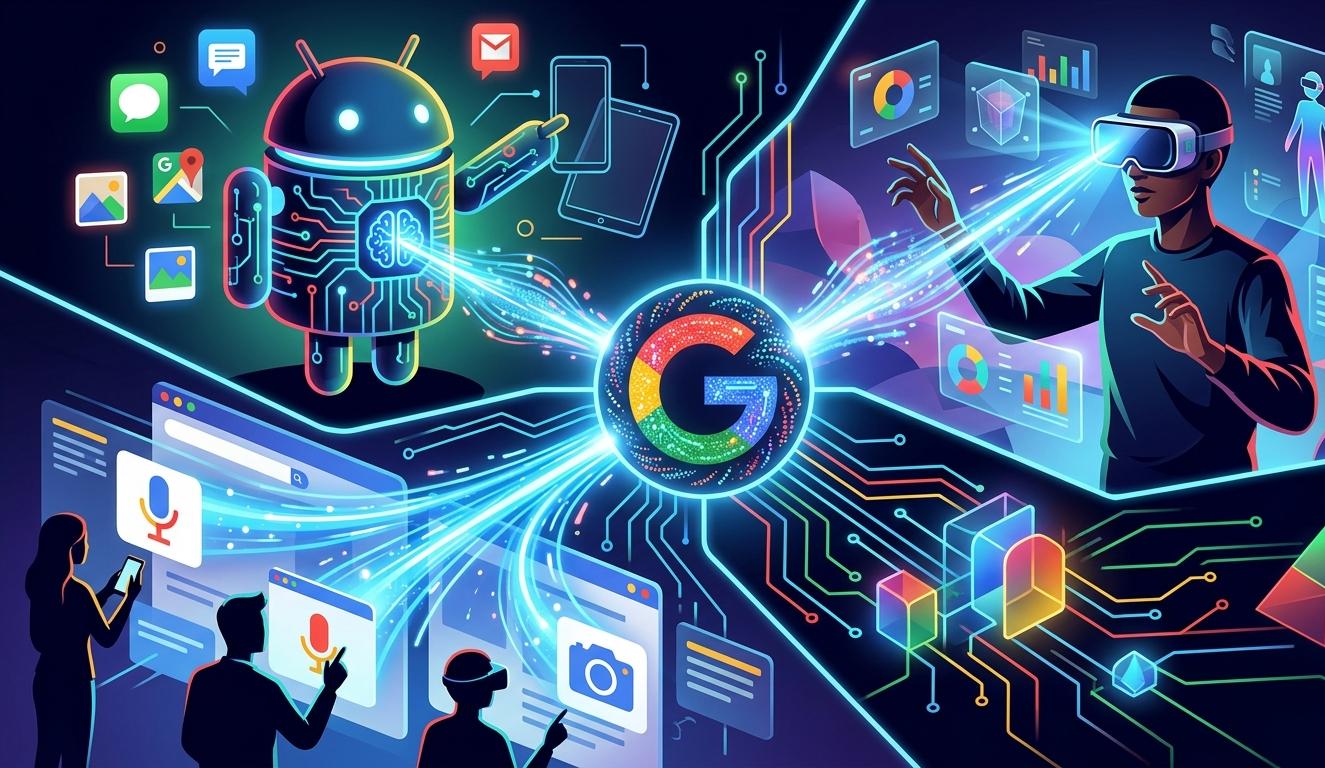
Artificial Intelligence is no longer just a feature — it is becoming the foundation of modern technology. At its latest developer event, Google unveiled a massive expansion of its AI ecosystem, integrating advanced AI capabilities deeper into Search, Android, Workspace, and Extended Reality (XR) devices. The announcement signals Google’s vision for a future where AI becomes seamlessly embedded into everyday digital experiences.

AI-Powered Search Becomes More Conversational

Google Search is evolving beyond traditional keyword-based results. With the latest AI upgrades powered by Gemini models, users can now receive more conversational, context-aware, and detailed responses directly within search results.

The new AI-powered Search experience can:

  • Summarize complex topics instantly
  • Answer multi-step questions
  • Provide personalized recommendations
  • Generate visual and interactive responses
  • Assist users with planning, learning, and research tasks

This marks one of the biggest transformations in Google Search history, positioning AI as the central engine behind information discovery.

Gemini AI Expands Across Android

Google is also integrating Gemini AI deeper into Android devices. The company showcased smarter AI assistants capable of understanding on-screen content, voice commands, images, and user behavior in real time.

Some of the new Android AI features include:

  • Real-time voice assistance
  • AI-generated replies and summaries
  • Smart photo and video editing
  • Context-aware app suggestions
  • Enhanced productivity tools

By embedding AI directly into the operating system, Google aims to create a more intuitive and personalized smartphone experience.

Google Pushes Further Into XR and Smart Glasses

One of the most exciting announcements was Google’s renewed focus on XR (Extended Reality), including AI-powered smart glasses and immersive computing experiences.

Google demonstrated how AI can enhance XR devices by:

  • Translating conversations live
  • Providing navigation overlays
  • Identifying objects and landmarks
  • Delivering contextual information in real time
  • Supporting hands-free productivity

This move suggests Google is preparing for a future where wearable AI devices may eventually complement or even replace smartphones in certain scenarios.

AI Competition Continues to Intensify

Google’s aggressive AI expansion comes amid growing competition from major technology companies including OpenAI, Microsoft, Apple, Meta, and Anthropic. The race is no longer just about chatbots — it is about building complete AI ecosystems across devices, software, search, and hardware.

As companies invest billions into AI infrastructure and innovation, consumers can expect:

  • Smarter digital assistants
  • Faster productivity tools
  • More personalized experiences
  • Advanced automation
  • New forms of human-computer interaction

What This Means for the Future

Google’s latest announcements demonstrate that AI is rapidly becoming the core layer of modern computing. From search engines to smartphones and wearable devices, AI is shaping how people interact with technology every day.

The expansion of AI across Search, Android, and XR signals a future where digital experiences become more intelligent, adaptive, and immersive than ever before.

While challenges surrounding privacy, accuracy, and regulation remain important, one thing is clear: the next era of technology will be powered by AI.

Final Thoughts

Google’s latest AI push is more than a software update — it is a strategic shift toward an AI-first ecosystem. By embedding AI across its products and platforms, Google is positioning itself at the center of the next generation of digital innovation.

As the AI race accelerates, the tech industry is entering a transformative period that could redefine how humans search, communicate, work, and interact with the world around them.