

The Rise of AI Agents: Are Traditional Apps Becoming Obsolete?
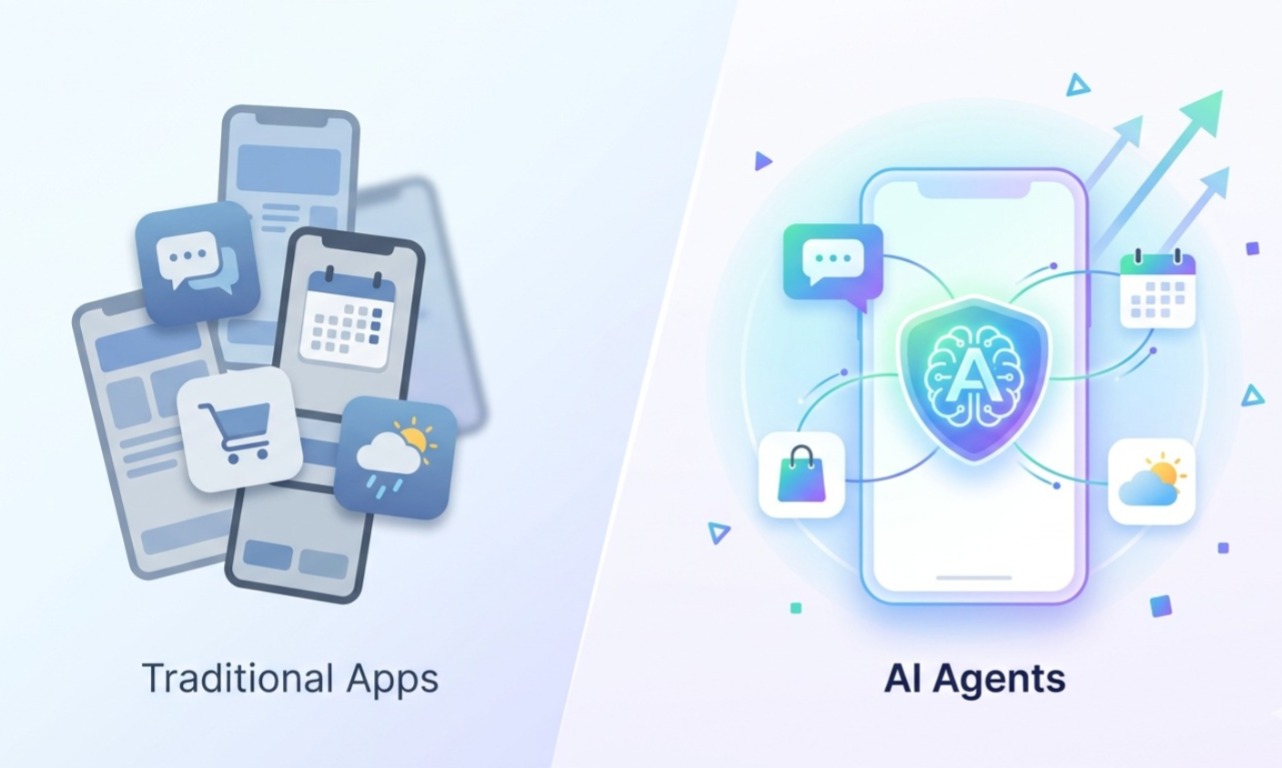
The way we interact with technology is undergoing a major transformation. For years, users have relied on multiple apps to complete everyday tasks—booking services, sending emails, managing schedules, and more. However, a new wave of innovation is emerging: AI agents.
Powered by advancements from companies like Google, Microsoft, and OpenAI, AI agents are beginning to replace traditional apps by offering a more seamless, intelligent, and unified user experience.
What Are AI Agents?
AI agents are intelligent systems that can perform tasks on behalf of users—often without requiring step-by-step instructions. Unlike traditional apps that serve a single purpose, AI agents act as multi-functional assistants.
For example, instead of:
- Opening a travel app
- Searching for flights
- Comparing prices
- Booking tickets
You can simply tell an AI agent: “Book me the cheapest flight to Dubai next weekend,” and it handles the entire process.
Why Apps May Become Less Relevant
The shift from apps to AI agents is driven by convenience and efficiency.
1. One Interface for Everything
Instead of switching between multiple apps, users interact with a single AI interface that manages all tasks.
2. Smarter Decision-Making
AI agents can:
- Compare options instantly
- Learn user preferences
- Suggest optimized solutions
3. Time-Saving Automation
Tasks that used to take minutes—or even hours—can now be completed in seconds with minimal input.
How Big Tech Is Driving the Change
Major tech companies are investing heavily in AI agents:
- Google is integrating AI deeply into search and productivity tools
- Microsoft is embedding AI across its ecosystem
- OpenAI is advancing conversational and task-based AI systems
This competition is accelerating the development of more powerful and capable AI assistants.
Real-World Use Cases
AI agents are already being used for:
- Personal productivity (emails, scheduling, reminders)
- Customer support automation
- Online shopping and price comparison
- Travel planning and bookings
- Business analytics and reporting
As capabilities grow, their role will expand across nearly every digital activity.
Challenges to Overcome
Despite the potential, AI agents still face challenges:
- Privacy concerns around data access
- Accuracy and reliability of decisions
- Trust and user adoption
- Integration with existing platforms and services
Addressing these issues will be critical for widespread adoption.
What This Means for the Future
The rise of AI agents signals a shift from app-based ecosystems to AI-first experiences. In the future:
- Users may rely less on downloading apps
- Businesses may need to optimize for AI interaction instead of app interfaces
- Entire industries could be reshaped by automation
Conclusion
AI agents are not just an upgrade—they represent a fundamental change in how we use technology. By simplifying tasks, saving time, and offering smarter solutions, they have the potential to make traditional apps less relevant in the years ahead.